Cow Outline Beef Cow Calf Pair Outline
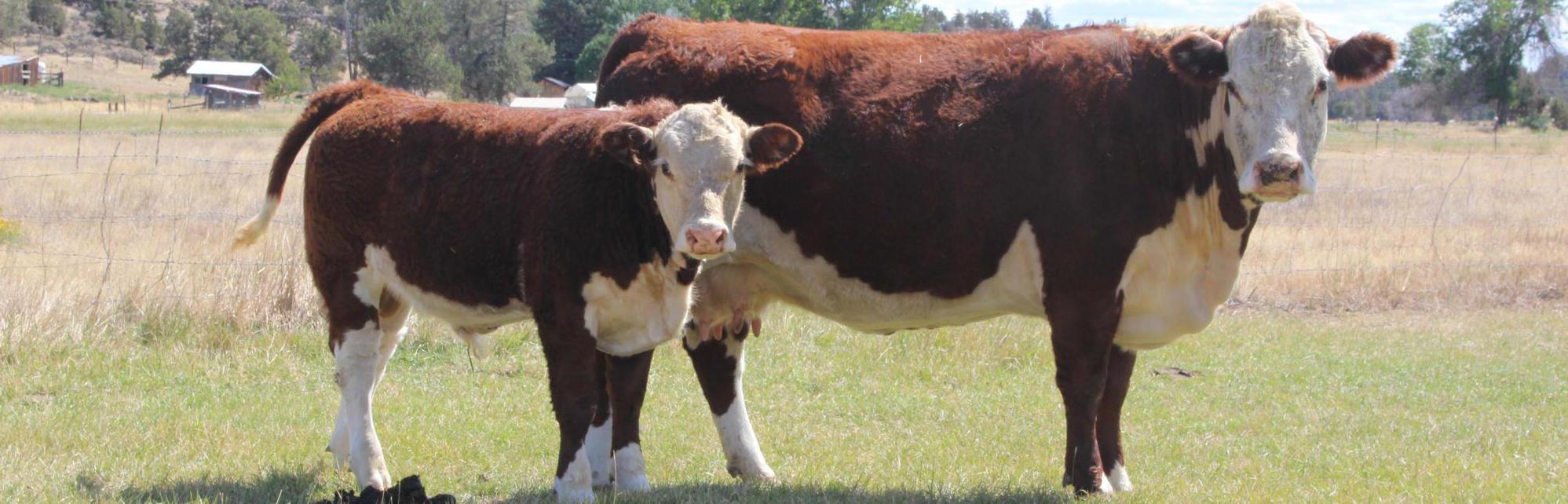
Raising cattle for profit requires a detailed management plan that sets product goals and timelines days, weeks and even years in advance. These guidelines for health, nutrition and reproductive management volition assist beef cattle producers make disquisitional decisions. Specific recommendations fall into an almanac production cycle consisting of four periods:
- Lactation, breeding and early pregnancy.
- Midgestation and weaning.
- Dry catamenia and pre-calving.
- Calving.
These activities occur at the same relative time in the wheel regardless of winter, spring or fall calving. This guide is a source of practices typically used by cow-dogie producers. Use the practices that best fit your performance. Suit them to your location and management goals. Contact Extension professionals or a local veterinarian for more data.
Introduction
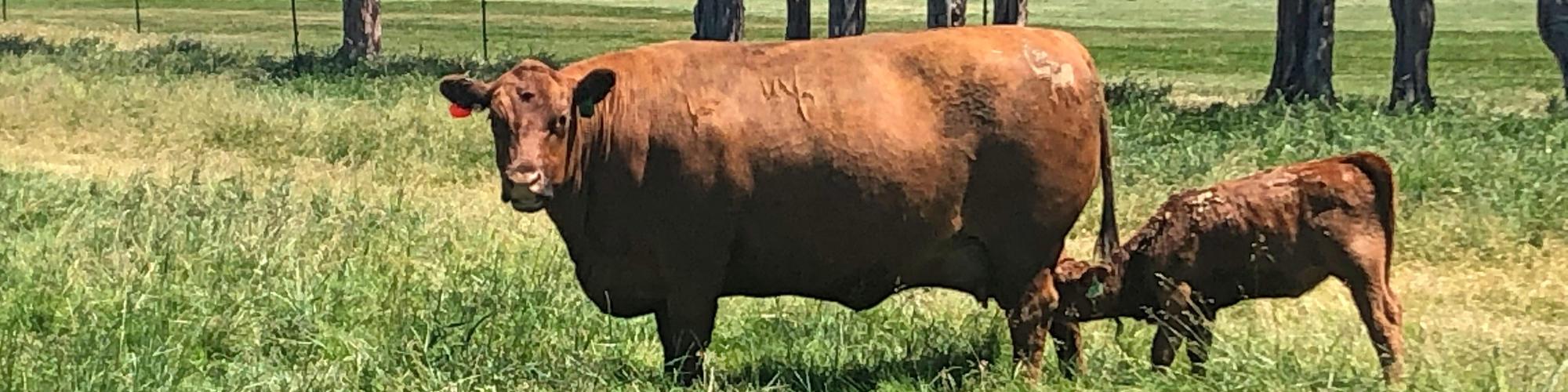
Here are some recommendations for reproduction, diet and health in a beef cow-calf operation. See the glossary for aid in agreement whatsoever of the terms used here.
Reproduction
Efficient reproduction is the nigh important management category. The primary goal of beef producers is to produce 1 live calf per cow each twelvemonth. I measure of reproductive efficiency for cow-calf operations is the per centum annual calf ingather. Past using sound fertility management, producers tin attain a 90% to 95% almanac calf crop. To achieve this goal, consider reproductive traits in all management strategies.
Poor fertility is often the reason for reduced calf crops. Factors that reduce fertility include nutrition, herd health, genetics, cow age, bull fertility and environment. Each plays a major part in the reproductive efficiency of cattle. A deficit in whatsoever one area typically affects other factors, ultimately reducing the reproductive performance and overall production of the herd.
Many of the factors affecting reproductive performance can exist controlled to some extent. A well-planned and executed reproductive management plan will meliorate fertility and productivity.
Nutrition
When developing a cow-calf nutrition program, examine all variables critically and endeavor to optimize available feed resource. When developing a ration, consider cow size, milk production, body condition score, age, stage of gestation, weather and growing conditions. Determine the food content of the feed or forage for your herd by sending feed samples to an belittling laboratory. Knowing the nutritional quality of the feed is essential when formulating feed rations. To learn more about developing a diet plan, encounter Beef Cattle Nutrition Workbook, EM 8883.
If possible, separate the herd into groups with similar nutritional needs. Examples of groups include bulls, mature cows in boilerplate status, older and thin cows, beginning-calf heifers and yearling replacement heifers.
Pay close attention to the levels of minerals bachelor in cattle feed. Codify salt and mineral supplementation based on needs specific to your area and available feeds. Too, be aware of the timing and source of the supplement yous choose to apply. Cattle respond differently to organic and inorganic supplement sources. Requite special attending to calcium and phosphorus ratios, also as to levels of selenium and copper. Contact your nutrition consultant or Extension professional person for recommendations. To learn more about mineral supplementation, see Mineral Supplementation of Beef Cattle in the Pacific Northwest, PNW 670.
Depending on the feed source, cattle producers may need to provide poly peptide supplements. Utilize circumspection when using nonprotein nitrogen, or NPN, supplements, and seek the advice of a nutritionist. Supplements containing non-protein nitrogen NPN should be fed with caution when cattle are consuming a low-quality, loftier-roughage diet. Ruminant bacteria need a quickly available energy source to successfully use urea, or excess ammonia may enter the bloodstream, causing toxicity and potentially death. Forage-based diets typically do not have a large amount of rapidly degradable energy. Consequently, livestock producers need to limit the use of NPN supplements. Feeder-quality alfalfa hay is often the most economical source of supplemental energy and protein.
Dry out matter is that role of a feedstuff that contains no weight from moisture. Total daily dry affair intake of beefiness cattle should equal 2%–3% of the animal'southward body weight, but will depend on the quality of the feed. A pound of dry out hay contains more than dry affair than does a pound of alfalfa silage. Average grass or alfalfa hay contains 85%–ninety% dry matter, while alfalfa silage contains simply 25%–35% dry matter.
The quality and palatability of the feed has a stiff influence on intake. Maximize the product and utilization of your provender resources. Use Management-intensive Grazing to maximize fodder production and reduce feeding costs.
If forage product is low, pasture renovation might be required. This may include reseeding, fertilization, weed command and planting new provender species. When grazing rangelands (open country with native vegetation), assess forage resources by estimating forage product, identify forage species, and plant a long-term rangeland monitoring protocol. Meet the Western Oregon and Washington Pasture Agenda, PNW 699, and Pasture and Grazing Management in the Northwest, PNW 614, for more information on pasture management. Meet Applying Adaptive Grazing Management, PNW 711, for more information on managing rangelands.
Allow cattle to harvest forage without overgrazing. Do non graze forages below 3–4 inches, or impairment to the plant will occur. Grazing is the nigh economical method of harvesting grass. Extend the grazing flavor every bit much as possible by planting annual crops such every bit cereal grains for early spring and fall grazing, or past stockpiling standing forage for tardily autumn or winter pasture. Some other option is to windrow the standing forage (such as tall fescue or Russian wildrye) to be grazed at a later time. Stockpiling and windrowing continuing provender will simply work well in drier climates.
Health
For total herd wellness management, consider prevention, control and treatment of disease. A successful health program depends on a sustained, consistent regimen of vaccinations and parasite control, in add-on to conscientious observation and prompt, accurate diagnosis.
Establish a valid veterinary-client-patient-relationship with a veterinarian who can assess the herd'southward reproductive and performance data, appraise herd health and provide veterinarian services.
A veterinary can recommend a vaccination plan tailored to your herd'southward specific needs and help with the diagnosis and control of potential wellness problems. For more information, run into The Veterinary Feed Directive: Questions and Answers for Oregon Livestock Producers, EM 9151, and Cattle Vaccine Handling and Management Guidelines, PNW 637.
Natural breeding
The number of cows allocated per bull depends on a number of considerations, including:
- Age of the bull.
- Bull fertility and libido.
- Size of pastures.
- Vegetation.
- Climate.
- Topography.
Information technology is important to apply the appropriate number of bulls. Mature bulls can brood more cows due to their greater servicing capacity, just they might preclude younger bulls from convenance females.
Section anchor "period-one"
PERIOD ane: Lactation, convenance and early pregnancy
Postcalving, 195 days
Nutrition
Come across too Appendix 1, NRC requirements, months 1–six
This is the nearly critical menses nutritionally, as the cow is under enormous demands. During this time, she is maintaining a peak level of lactation, re-establishing her reproductive cycle, and becoming bred. Nutritional status and torso condition score during this menstruation have a major influence on conception charge per unit.
Non all hay has sufficient nutrients for cows at this stage of product. Alfalfa hay is ordinarily more than food dumbo than grass hay. Maturity of the forage at harvest has a major influence on hay quality. Pull hay samples and ship them to a certified laboratory to found the nutrient quality of hay fed to cows. See Analytical Laboratories Serving Oregon, EM 8677. For more than information on forage testing, meet Understanding Your Fodder Test Results, EM 8801.
The cow is expected to maintain a pregnancy for 283 to 285 days of the yr while also caring for her calf from the previous year'due south pregnancy. This leaves approximately fourscore days to breed back if she is to maintain a yearly calving interval. The postpartum anestrous interval (the interval from calving until she resumes estrus cycles) accounts for 50%–75% of this 80-day catamenia.
The first and often the second estrus post-obit the postpartum anestrous interval are of lower fertility. Therefore, it is likely that a cow will non conceive until ii estrous cycles afterwards the end of the postpartum anestrous interval — 66 to 87 days after calving if she re-establishes estrual behavior 45 days after calving. Thus, the calving interval might exist longer than 365 days. It is disquisitional to maintain this 365-twenty-four hour period interval. If the interval exceeds 365 days, profitability will endure, considering calves will be younger and lighter at weaning. For this reason, it is of import all cows exist in optimal body condition (with a condition score in the range of five–half-dozen). They should receive a nutrition college in total digestible nutrients following calving to ensure that the cow promptly returns to estrous beliefs.
Following conception, the major nutritional demand is lactation. Regardless of the time of yr of the calving season, cows demand to maintain a body status score of v and heifers a BCS of half dozen in order to have the torso reserves needed for winter conditions and maintaining healthy fetal growth. Cows and heifers should not enter the lactation period in poor body condition. If cows score a BCS of 4 or less, additional feed is advised in order for cows to gain weight and maintain energy reserves in grooming for calving. For more data on BCS, run across Beef Cattle Nutritional Workbook, EM 8883 (chapter 7, "Body Condition").
Health
Cows and bulls should receive all vaccinations annually at least two to four weeks prior to convenance or rut synchronization. This timing is considered safe whether using killed, genetically engineered, or modified live vaccines, or MLV. However, for some producers, it is logistically difficult to handle cattle pre-breeding, and it becomes necessary to vaccinate meaning cows, or calves and nursing significant cows. In these cases, the utilise of intramuscular MLV is not recommended unless the animals have been vaccinated with a product specified by the manufacturer inside the past 12 months. On the other hand, MLV intranasal products can be used on pregnant animals regardless of previous vaccination history. Follow the directions on the product label and consult your veterinary or Extension professional when questions arise.
Ask your veterinarian about other vaccines that might be needed. For more information on selenium supplementation, see Selenium Supplementation Strategies for Livestock in Oregon, EM 9094.
It also is important to control internal and external parasites. Internal parasites damage internal organs such as the gastrointestinal tract, liver and lungs. External parasites that can damage hides (cattle grubs), suck body fluids and spread disease (lice, ticks), and annoy the animals and reduce feed intake (flies, mosquitoes). Work with the veterinarian familiar with your herd to place problem parasites and recommend treatments.
For internal parasites, take a fecal sample and submit it to a veterinarian or a veterinary diagnostic laboratory for analysis. Exercise not treat if there are no parasites or the parasite count is depression. Treatment in these cases increases parasite resistance to de-worming drugs. If in that location are parasites, choose a dewormer that is specific for the type of parasite present. Employ products that are constructive confronting the parasites in your herd. Wait for signs of external parasites such as excessive rubbing or hair loss. Alternate products and the blazon of anthelminthics each year to slow the development of drug-resistant external parasites.
Dehorn and castrate calves equally soon every bit possible subsequently nascence, with careful attention to pain management. A veterinarian can provide drugs and teach y'all how to properly apply them to reduce the hurting and suffering associated with routine surgical procedures. These may include sedation, analgesia, local or regional anesthesia and anti-inflammatory medications. According to the American Veterinary Medical Association, procedures causing pain and distress, such as castration, dehorning and branding, should be conducted as early on as possible. Younger cattle showroom less pain, stress and distress in response to the procedures.
Reproduction
Select a calving season that optimizes your resources. Heifers and cows should exist bred to calve when your ranch grazing resources can be best utilized. With fall calving, calves should exist built-in early plenty that cows can rebreed before the onset of choppy weather. With spring calving, cows should calve before the rapid flush of spring growth. This allows calves to mature enough (reaching an age of nearly 45 to 60 days) to use (rapid growth) bound grass, and cows will do good from spring grass before rebreeding. As well consider your summer forage resources, timing of weaning and marketing strategies.
Heifers
Plan to start convenance heifers 20 to 30 days before mature cows. This will allow you to commit more fourth dimension to monitor heifers during their outset calving season and give them a longer postpartum menstruum to recuperate before rebreeding. Since heifers may have more calving difficulty than older cows, choose a calving ease bull or ane with a low birthweight Estimated Progeny Departure. Encounter Understanding Expected Progeny Differences for Genetic Improvement in Commercial Beefiness Herds, AS 1770.
Breeding season
When resources let, plan a 45-24-hour interval breeding season for heifers and a 45- to 64-day breeding season for mature cows. If virgin heifers fail to go significant within 45 days, they likely take delayed development or dumb fertility. Culling heifers that fail to breed in 45 days is wise as they may be subfertile. In improver, if they were to become pregnant after, they might experience problems conceiving the post-obit yr within the desired breeding season.
Bulls
Select bulls using a number of Expected Progency Difference traits (see Appendix 2), keeping in heed the weaknesses (such as calving difficulty) of your herd. Select sires to balance and strengthen these weaknesses. Don't effort to make rapid improvements in your herd past selecting for a single trait. Unmarried-trait pick by and large results in a refuse in other important traits.
Postpartum anestrous interval and calving interval
Complete preparation of the reproductive tract (involution of the uterus) for conception following calving requires xl to 45 days. In addition, it generally is 45 to 60 days after calving before a cow reestablishes estrual behavior and is observed in continuing estrus. Several factors affect the elapsing of this postpartum anestrous interval, including body condition, historic period and genetics.
Free energy from feedstuffs is distributed first to maintenance, then to milk product and growth, and finally to reproduction. Because the energy requirements following calving are greater than what a cow typically consumes, the reproductive arrangement ceases to part. This is a normal physiological process that cannot be prevented. All the same, the length of the postpartum anestrous period directly affects the cow'southward ability to get pregnant and impacts the profitability of your operation.
Proficient quality forage, such as vegetative plants in pasture or rangeland, plus an appropriate mineral supplement are critical at this stage to ensure prompt re-establishment of estrous behavior. Come across Beef Cow Nutrition Guide, C-735 .
Preparation for convenance
Cows
Allow cows at least 1 to two weeks to adapt to their convenance pasture earlier the offset of the convenance flavour.
Bulls
All bulls should be purchased and at the ranch for sixty days before the breeding season to adapt to the environs. (Run into "Choice of sires," for details on a breeding soundness examination.)
Bogus insemination
The number of cows that become pregnant during a breeding flavour has a direct impact on ranch profitability. An bogus insemination program can benefit a beef cattle operation in many means. It can be a tool to better herd genetics, improve calf crop uniformity, improve record keeping (as breeding dates are known), adjust the length of the convenance flavour and let you to select an advisable sire for each dam. For these reasons, information technology helps to have a basic understanding of the cattle estrous cycle and the details of an AI programme.
The proper detection of cows and heifers in oestrus is probably the most limiting factor for the success of an AI program. The estrus, standing rut, or "heat," happens prior to ovulation, which occurs at the beginning of the estrous cycle (approximately 21 days in cattle). The estrus is highly distinctive from the other phases of the estrous bike, due to cattle behavioral changes. Cows enter heat gradually. Estrus lasts approximately fifteen hours, only can range from six to 24 hours. During rut, females will exist sexually receptive, which is easily observed. The female will stand and allow mounting by other animals.
When convenance females based on ascertainment, watch all females in the forenoon and evening for a minimum of 30 minutes for signs of estrus. More than frequent observations may increase the chances of detecting a female person in rut. A primary sign of heat includes:
- Standing to be ridden by a herd mate or an altered male.
- Secondary signs of heat may help discover estrus; notwithstanding, females should not be bred based on these signs alone. These secondary signs include:
- Muddied sides (ribs and flanks) in wet environments.
- Ruffled pilus on tail head.
- Swollen vulva.
- Restlessness, including bawling.
- Articulate mucous belch from the vulva.
Yous may want to apply i of several common heat detection aids. These include tail caput paint, pressure level-activated patches and pressure-activated radio transmitters. You tin can likewise use Gomer (vasectomized, epididymized or deviated) bulls or hormone-treated steers to help observe heat. You can utilize chin-ball or breast harnesses with Gomer bulls and steers.
Greatest AI conception rates accept been observed when females are artificially inseminated between iv and 12 hours later observed rut. Ovulation tends to happen nearly 12 hours subsequently the finish of estrus. The AM/PM rule is useful when breeding females. For example, a group of females that showed estrus during the morning time check should be bred in the afternoon of the same day, while a group of females that testify oestrus in the afternoon or evening check should exist bred in the morning of the post-obit mean solar day, respecting a 12-hour interval from heat detection to convenance.
An alternative to conventional AI is the use of heat synchronization. This practice reduces the time required for ascertainment of estrus and tin effect in more than calves being built-in early in the calving season. These calves would therefore exist heavier at weaning. Many options for estrus synchronization are bachelor. The primal considerations for selecting an estrus synchronization protocol should include the time and skills available for heat detection, body condition of the cows or heifers, days postpartum, the availability of facilities, personal experience and costs. A list of rut synchronization protocols was compiled by the Beef Reproduction Chore Forcefulness, a group equanimous of representatives from the AI and pharmaceutical industries, veterinarians and reproductive physiologists.
After selecting the most appropriate rut synchronization protocol, follow the manufacturer's instructions closely. Programme the handling schedule advisedly on your calendar, every bit success depends on proper assistants and timing of treatments. Exist sure to have adequate aid and adept technicians when working cows. Do non vaccinate females during the estrus synchronization protocol. Studies have shown that vaccination effectually the time of breeding tin reduce pregnancy success, likely due to negative effects on corpus luteum function.
Another important signal in an AI program is the pick and management of semen. Purchase semen from reputable suppliers. They volition collect semen for AI from bulls of proven superior genetics using EPD values (come across "Selection of sires," Period 3). The Expected Progency Difference values for these bulls by and large are highly accurate. The accuracy of EPDs is primarily a function of the amount of information available on an individual. As more information becomes bachelor and the progeny record grows longer, an animal'south calculated EPD for a trait volition change.
When storing semen at the ranch, remember to record the liquid nitrogen levels in the tank weekly or biweekly to constitute a schedule for replenishment, equally unnecessary thawing of semen can reduce fertility.
Finally, use a cleanup bull after the conclusion of AI to breed those females not successfully inseminated. Record the date when bulls were introduced into the herd. These records will help determine the success of the AI and estrus synchronization programs.
For this reason, cow-to-bull ratios vary considerably when using more than one sire.
Bulls vary in their desire to mate, so bull-to-cow ratios tin range from 1:10 to i:lx. Bull-to-cow ratios can as well depend on the capability of individual bulls and the state of affairs in which they are placed (synchronized or nonsynchronized herds, for example). A study past J. Walker and colleagues of Southward Dakota State University found final pregnancy rates of cows on rut synchronization and AI protocols that were exposed to cleanup bulls was similar when using a ane:25 bull-to-female ratio and a 1:50 bull-to-female ratio. Producers need to evaluate the cost difference of purchasing and maintaining twice as many bulls to maintain a 1:25 bull-to-female ratio following estrus synchronization and AI.
Some other consideration is the size and topography of the breeding pasture. Cow-to-bull ratios should be considerably lower on large pastures or crude terrain. Find bulls and cows during the natural mating period for breeding action and to appraise bull libido. Bulls may become injured during the convenance flavour, resulting in a reduced pregnancy rate. Injured bulls need to be removed and replaced immediately.
Department anchor "flow-two"
Menses 2: Midgestation and weaning
110 days
Diet
See also Appendix one, NRC requirements, months 7–x
This period has the everyman nutritional demands for the cow, specially afterwards the calves are weaned. Use the everyman quality feed resources during this menstruation. Poorer quality roughage, such as ingather residues, and lesser quality hay are ideal. However, it is important that the cow not lose excessive body status during this time. Cows should never drop more i to one.5 points in condition scores. Aim for an average trunk status score of five–6.
Ready calves for the stress of weaning by supplying feed that meets their requirements for growth. Raise their allowed systems with the vaccines recommended by your veterinarian. Keeping freshly weaned calves on an acceptable ration is critical to maintaining wellness and minimizing the effects of weaning stress.
Advisedly observe calves during weaning. The stress of separation ofttimes causes reduced feed and water intake and can depress the immune system. This results in a greater likelihood of sickness and even death. Consider low-stress weaning methods such as argue-line weaning and 2-step weaning. Meet Weaning management of beefiness calves.
Health
Nearly vaccines used to protect calves against respiratory and clostridial diseases require an initial vaccination followed by a subsequent booster, unremarkably ii to six weeks afterwards. Advisedly read and follow the vaccine manufacturer's directions. The vaccine series should exist completed at least 10 days prior to weaning. Consult your veterinary or Extension professional for recommended vaccines. Typically, if calves are destined for an auction, backgrounding lot or feedlot afterwards weaning, intranasal vaccination for IBR, PI3 and BRSV is recommended.
Heifers kept for breeding should also be vaccinated against BVD, PI3, IBR, BRSV, campylobacter (vibriosis), and leptospirosis between iv and 10 months of age. In addition, heifers kept for convenance must be vaccinated for brucellosis (Blindside's affliction) by a licensed, accredited veterinarian. Country regulations vary as to the time of vaccination, but is typically at 4–12 months of age. Check with your state veterinarian or local practicing veterinary for specific information on brucellosis.
Command internal and external parasites in your herd. Follow the label directions related to dosage for different weights and ages; administer treatments a minimum of four weeks before convenance.
Always follow the label directions for all wellness products. In addition, follow the recommended Beef Quality Assurance injection sites for all products. For more information, run across Beef Quality Assurance.
Reproduction
Testing heifers and cows for pregnancy 35 to 45 days after the breeding season reduces operating costs. Detection of pregnant and open (non pregnant) cows allows producers to allocate resource to productive cows and sell cows that are not going to produce a calf next year. The producer tin sell the cows that are non pregnant immediately after testing or weaning the dogie in order to avoid the cost of feeding a cow that will not produce a calf the post-obit year.
Ideally, schedule pregnancy diagnosis exams with your veterinarian soon afterwards the breeding season. In that location are 3 methods for detecting pregnancy: rectal palpation, ultrasound and blood testing. A veterinarian can observe pregnancy through rectal palpation every bit early as 35–45 days afterwards breeding. An ultrasound can discover pregnancy every bit early as 28 days. The advantages of these methods are that results are available immediately and the veterinarian tin can approximate the calving date.
Alternatively, a producer can choose to order a claret test that detects the presence or absence of a protein associated with pregnancy. Blood exam kits can be ordered online and delivered through the mail. Blood tests signal whether an animal is pregnant or open up, but provide no estimated fetal age. In add-on, the results are not immediately bachelor. However, these tests are relatively cheaper to conduct and their results are highly accurate. Producers collect 2 cubic centimeters of blood from under the tail of the cow and send it to the lab. The lab tests for pregnancy-associated glycoproteins, or PAGs, and returns the results with either a positive (pregnant) or negative (open) outcome with no age estimate for the fetus. Blood from heifers and open up cows may be collected as soon as 30 days after breeding. Lactating cows demand to wait 73–90 days subsequently calving because a false pregnancy test may event due to residual PAGs from the previous pregnancy.
Regardless of which blazon of pregnancy test yous choose, detecting the pregnancy of open up cows tin help producers make culling decisions that tin ultimately save money.
Reasons to cull cows at weaning
- The cow is open up.
- The cow has failed to wean a dogie.
- The moo-cow is unsound (cows with poor udders, legs and feet, or worn or missing teeth).
- Poor disposition. The saying "a bad apple spoils the whole barrel" too applies to a herd of cows. Culling one "chilling" or "excitable" moo-cow, regardless of her production record, helps at-home a herd. A contempo report by OSU proved that cows with poor disposition accept lower percentages of breeding back in 60 days. To learn more about disposition and its effect on reproduction, see Temperament and Operation of Beef Cattle, BEEF021.
- Poor calf operation. Light calf weaning weights, due to either deficient milk product or a late calving engagement, cost you pounds of beef and turn a profit.
- Poor maternal beliefs. Time lost caring for an abandoned calf or sick calves resulting from reduced colostrum intake costs you lot money.
- Calving difficulties (dystocia).
Consider your herd goals. Have you met your targets or are some production goals deficient? Review and summarize the previous year's calving and production records. Consider the percent of cows calving during each 21-day period of the calving season, calf nascence weight, calving difficulties, maternal disposition, weaning weight of calf and weaning weight ratio for each cow.
Heifer selection criteria
Take the following factors into account when selecting heifers:
- Weaning weight. Consider a heifer'south ability to reach a breeding target weight of 65% of expected mature body weight by the time she will be bred; see Appendix three. Recent enquiry has demonstrated that showtime-dogie heifers with high-growth EPDs often have an extended postpartum anestrous interval and are slower to breed dorsum for their second calf. In addition, selecting merely the biggest heifers could result in increasing the boilerplate mature size of your herd. Seek a balance when selecting replacement females.
- Birthdates. Heifers that were born early in the calving flavour tend to weigh more than at breeding. They are the daughters of reproductively efficient cows and have the potential to be more reproductively efficient.
- The dam's production tape.
- The sire's EPD values (see Appendix two).
- The heifer's conformation.
- The heifer's temperament.
- Never select freemartin heifers (a sterile or otherwise sexually imperfect female person born every bit the twin of a bull dogie).
- Select 20% more replacement heifers than are needed to allow culling for reproductive failure.
Onset of puberty
Remember that weight, torso composition, age, heredity and breed affect puberty. Heifers can be bred only later on they accomplish sexual maturity or puberty. The ii most disquisitional factors affecting the onset of puberty are historic period and weight (run across Appendix iii).
- Decide target weights for breeding — at least 65% of expected mature torso weight at an average body condition score of 5 to half dozen.
- Calculate days to convenance and average daily gain needed to reach breeding target weight.
- If fourth dimension and resource allow, weigh heifers monthly to ensure that all heifers reach 65% of expected mature body weight past the first of the breeding flavour. Heifers may demand to be grouped according to weight for feeding. Avert feeding all heifers to the average; this approach will effect in some heifers being overfed and others not attaining their target weight. Overfeeding between weaning and puberty may cause backlog body condition and mammary gland fat deposition. Fat deposited in the mammary gland, or udder, results in impaired milk production. Excess body fatty too tin reduce fertility, resulting in poor conception rates.
Reproductive tract exam
The success of a breeding season correlates with the percentage of heifers that reached puberty before or early on in the season. The pubertal status of heifers prior to convenance season has been suggested equally a main cistron affecting conception rates.
Determine puberty achievement and initiation of normal estrous cycle by evaluating the heifer reproductive tract four to half dozen weeks prior to the breeding season. The reproductive tract score, or RTS, is a subjective measure of the sexual maturity of a heifer. A trained professional (usually a veterinarian) will palpate the heifer'south reproductive organs through the rectum. The veterinarian volition determine the score based on the degree of uterine development and ovarian status (the size of the dominant follicle and the presence or absenteeism of a corpus luteum). Each heifer is assigned a score from 1 to five (one = young; 5 = presence of a corpus luteum). (Tabular array 1).
| Reproductive tract score | Uterine horns (diameter, mm) | Ovarian length (mm) | Ovarian tiptop (mm) | Ovarian width (mm) | Ovarian structures |
|---|---|---|---|---|---|
| 1, Prepubertal | Immature, less than twenty mm, no tone | 15 | 10 | 8 | No palpable follicles |
| 2, Peripubertal | 20–25 mm, no tone | 18 | 12 | x | 8 mm follicles |
| iii, Peripubertal | 20–25 mm, slight tone | 22 | 15 | 10 | 8–10 mm follicles |
| four, Pubertal | 30 mm, good tone | 30 | xvi | 12 | > ten mm follicles |
| 5, Pubertal | > 30 mm | > 32 | twenty | fifteen | CL possible or present |
Anderson, K.J., D.M. LeFever, J.S. Brinks, and One thousand.1000. Odde. 1991. The utilize of reproductive tract scoring in beef heifers. Agri-Practice 12:19–26.
In add-on, palpate heifers at 12 months of historic period to make up one's mind the size and shape of the pelvic opening. Obtaining pelvic measurements on yearling heifers and culling those with the smallest pelvic areas can assist reduce the incidence of dystocia, or difficult births. Do not select heifers based on pelvic area alone; in fact, pelvic dimension appears to be highly correlated with dam size. Past selecting for large pelvic dimensions, producers are also indirectly selecting for large heifers, which typically have greater nutritional requirements and produce large calves. Your veterinarian or Extension professional person can assist you collect these measurements.
After breeding, keep the replacement heifers split up from cows, every bit their nutritional requirements are different. Maintain replacement heifers in moderate condition (body condition score of five to half dozen) and feed them to weigh 85% of expected mature trunk weight of the herd at calving. Underfeeding will non reduce nascency weights and may actually increase the incidence of dystocia. Underfed heifers lack the energy and strength necessary for delivery. Further, underfeeding tin issue in a delayed return to estrus following calving, reduced milk product during lactation, or dumb lifetime productivity. Underfeeding tin also impair the power of the calf to nurse quickly after birth, decreasing the corporeality and quality of colostrum received. Overfeeding, on the other hand, can result in an increased incidence of dystocia, likely due to a fat-filled nativity culvert and increased abnormal presentations.
Department anchor "period-3"
Menstruation iii: Dry period and pre-calving
60 days
Diet
Encounter besides Appendix 1, NRC requirements, months eleven and 12
This period is the shortest, just it should non be neglected. During these concluding 50 to threescore days of gestation, approximately 65% to fourscore% of fetal growth occurs. If the birth weight is lxxx to 85 pounds, the increase in fetal weight during this period is 50 to sixty pounds, or about a pound per solar day.
Cows receiving inadequate diet directly nutrients away from other demands to meet fetal growth requirements. Poor nutrition during this flow can consequence in weak labor, increased dystocia, an extended postpartum anestrous interval, impaired milk product, reduced calf weaning weight and poor rebreeding functioning. On the other paw, overfeeding during pregnancy can outcome in reduced birth weight, decreased milk production, increased dystocia and neonatal death loss. Studies accept shown that nascency weight decreases every bit cow condition score decreases below 3.5 or increases above seven. Only it does not modify significantly within the range of 3.five to 7. For more information on BCS, encounter Beef Cattle Nutritional Workbook (affiliate vii, "Torso Condition"), EM 8883.
If resource allow, separate the herd into groups with similar nutritional needs. At a minimum, first calf heifers should be grouped separate from the moo-cow herd. Other groups to consider are cows in proficient BCS (v or 6) and cows in inadequate BCS (less than 5) and older cows.
Mineral supplementation is especially important during this stage of gestation. An Oregon State University written report found that providing organic trace mineral supplements to mother cows in late gestation benefited calf operation through weaning.
Selenium (an essential trace mineral for livestock) is scarce in many Oregon soils. A deficiency of selenium (Se) tin crusade nutritional myodegeneration, also known as white muscle affliction. Selenium deficiency besides causes furnishings that are not immediately observable and result in poor livestock functioning. Examples include poor fertility, abortion, weak calves and aborted calves.
For over 20 years, research at Oregon Land University has demonstrated the potential for using selenium as a fertilizer subpoena to increase concentrations in forage for livestock feeds. This approach adds organic selenium to an animal's diet through agronomic biofortification. Agronomic biofortification increases concentrations of essential elements (such every bit selenium) in the edible portions of crop plants through enriched fertilization and uptake past the plants being grazed or harvested for subsequent feeding. This practise can potentially overcome the inconsistent intake of salt-mineral mix selenium supplementation. Higher amounts of selenium can be provided safely through fertilization.
Health
Vaccinations are given to cows prior to calving in guild to pass antibody protection to calves through the colostrum. If scours are a problem in your herd, scours vaccination is suggested at this fourth dimension.
Prepare calving area and supplies
The preparation of the calving area and gathering of calving supplies is often overlooked. However, preparing in advance for calving can help to reduce time to come issues.
If possible, rotate the calving surface area annually to help reduce the incidence of scours and disease. Apply your cleanest pastures for first calf heifers.
Suggested items to have on manus include:
- Injectable antibiotics.
- Drench or oral tube feeding bag.
- Electrolytes.
- Disinfectant for navels.
- Frozen colostrum (thaw slowly) or commercial colostrum substitute.
- Obstetrical assistance equipment.
- Obstetrical lubricants and disinfectants.
- Sanitizers for calving area.
Reproduction
Timing of feeding has been shown to influence the time of day calving occurs. Consider kickoff tardily afternoon/evening feeding about one month before the start of the calving season to increase the number of births occurring during daylight hours.
Begin feeding cows an increasing plane of nutrition approximately 50 to 60 days before the onset of calving. Improved moo-cow trunk condition at this time will reduce the postpartum anestrous interval and increase the number of cows that rebreed apace.
Selection of sires
Careful consideration of genetics will allow you to brand significant advancements in your herd. The bull you lot select should be able to contribute substantially superior genetics.
If using multiple breeds, know the breed averages for birth weight, weaning weight, yearling weight, 365-day hip height, etc.
Consider these criteria in choosing sires:
- Expected progeny deviation values (run across Appendix 2), because birth weight, growth traits, maternal characteristics (if raising your own heifers) and carcass traits. EPD values are the nigh benign tool to directly genetic changes inside your herd. Choose bulls sired by bulls with high-accuracy EPDs to ensure that you are indeed purchasing the traits you want.
- 205- and 365-mean solar day adjusted weight.
- 205- and 365-solar day hip height. This trait will allow you lot to increase, decrease or maintain the mature size of your cattle.
- Thickness and muscling (below average, average, above average).
- Semen quality motility and morphology of sperm.
- Scrotal circumference (at i yr of age). Scrotal circumference in immature bulls is a useful indicator of reproductive potential in beefiness cattle. It is positively correlated with total sperm production and favorably related to semen quality. In addition, there is a genetic relationship between SC and age at puberty in female offspring. Research has as well shown a relationship between SC and historic period at showtime breeding and at rebreeding in female offspring. See Scrotal Circumference in Bulls Linked to Puberty in Replacement Heifers, BC-2007.
- Yearling bulls with an SC less than 32 cm by and large are prepubertal and should not be used. Daughters of young bulls with SC exceeding 36 cm commonly attain puberty at a younger age. If using a terminal sire and no calves will be retained, a smaller SC sire is adequate. Use caution when using a concluding sire and practice not retain any replacement heifers resulting from this mating.
- Conformation and structural soundness.
- Temperament.
- Actual nascence weight.
- Operation data from sire, dam and siblings (if available).
Bulls should be given a breeding soundness exam lx days before the beginning of the breeding season. If bulls fail the examination, you volition accept aplenty time to secure replacements. Breeding soundness exams should include:
- A concrete examination.
- Examination of the internal and external reproductive tract.
- A semen evaluation.
- Evaluation of libido. This observation is fabricated by the rancher.
Section ballast "period-iv"
Menstruation 4: Calving
i day
Nutrition
Cows usually practice not eat a significant quantity of feed immediately before or later on giving nascence. Notwithstanding, good quality hay and adequate fresh water should be bachelor at all times, especially subsequently an assisted birth associated with dystocia.
Health
Wellness practices at this time are related to making certain that the calf is off to a sound kickoff and the cow does non suffer any long-term reproductive problems. Calving difficulties or a retained placenta may cause injury or illness to the cow, extending her postpartum anestrous interval and preventing her from cycling within 45 days of calving.
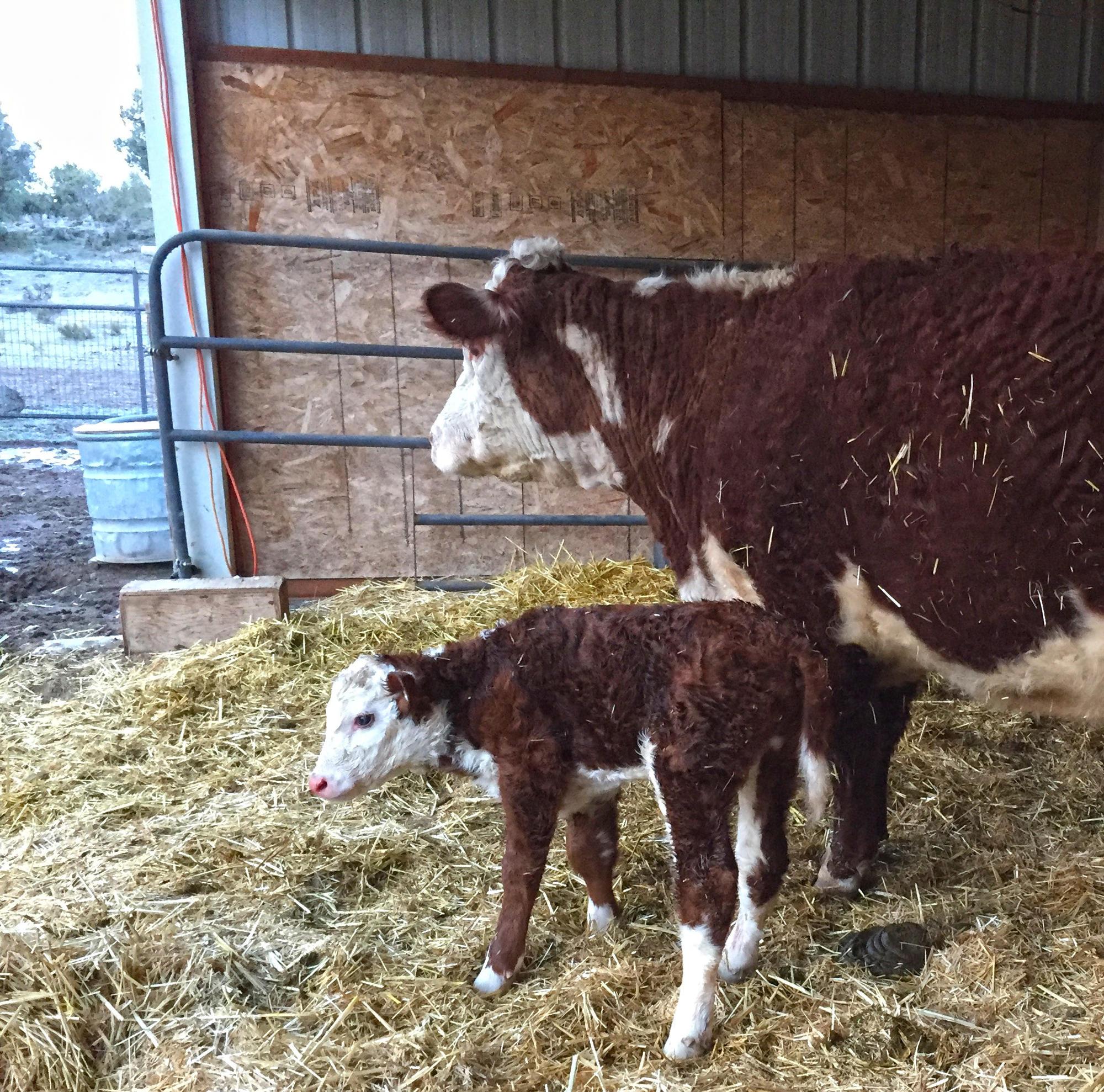
A retained placenta may indicate a selenium deficiency; check feed samples and mineral supplements for adequate selenium. Allow the cow to expel a retained placenta naturally; care for cows only for signs of systemic illness. A cow with a nursing calf should have adequate oxytocin stimulation to expel a retained placenta. Consult your veterinary if the placenta is retained longer than 12 hours or the incidence is over 10% of calvings.
Keep sick animals separate from the remainder of the herd to limit the transfer of infection and facilitate observation. If feasible, separate pairs from pregnant cows daily or equally often as possible. This will improve the ability to discover dystocia quickly, identify calves that are non claimed past their dam, and manage late-calving cows differently from those calving early in the calving season. This practice also reduces the spread of affliction in the event of an outbreak.
Calf health procedures at nascence
- Apply disinfectant solution to the umbilicus.
- When "dipping," immerse the total length of the cord in the solution, right upward to the calf's belly. Use a fresh dispensable paper cup for each dogie or a nonreturn teat dip cup for dipping to avoid transmitting disease between animals. The tincture conception of iodine is desirable because the alcohol will promote drying; even so, 7% tincture of iodine is at present a controlled substance and will require a prescription from your veterinarian. Do not try to substitute an iodine-based teat dip, as it volition delay drying of the cord and non be effective.
- Provide colostrum for calves that do not nurse within four hours of birth. Colostrum will be absorbed by the calf for the first 12 hours following nativity. Generally, a 75-pound dogie should receive ii to three quarts of colostrum inside four to six hours of nascency.
- Identify calves with ear tags or tattoos.
- Tape sexual practice, birthdate, dam, sire and birth weight (if available).
- Check calves frequently for scours and pneumonia.
Reproduction
Dystocia (calving difficulty)
Getting your cows bred is of master importance. All the same, if the calf dies during delivery, all reproductive and genetic gains are lost. Dystocia occurs in only about two% of mature cows, but in 10%–12% of heifers. Observe heifers carefully every ii hours during the calving season. Dystocia affects not only calf survival, simply besides future reproduction and often results in retained placenta.
Look for these signs of calving difficulty:
- Only the dogie'southward tail is visible.
- Only the dogie'southward head is visible.
- Front feet protrude past the knees, but the calf'south nose is not visible and cannot exist located easily.
- Feet are upside down.
- The caput and only one foot are visible.
- More than than 2 feet are visible.
- No progress after xxx–60 minutes of active straining. In this event, an examination is recommended.
- Increased respiratory rate.
Management and genetic factors associated with dystocia include:
- Dogie birth weight.
- Age and parity of dam.
- Dam'south pelvic area.
- Dam'southward breed or size.
- Sex of dogie.
- Sire breed.
- Gestation length.
- Dam'due south sire.
- Nutrition and body condition score of dam.
- Geographic region.
- Exercise.
- Hormonal factors.
Summary
The Beef Cow-Calf Direction Guide provides data to help experienced and novice beef cattle producers manage the almanac production cycle of a cow-calf operation. This set of recommendations for the four major production periods will assist the beef producer prioritize tasks and provide a foundation for a successful performance.
Boosted resources
- Bohnert, D., S. Filley, G. Parsons, R. White. 2016. Beef Cattle Nutrition Workbook, EM 8883.
- Whitehurst, B. 2015. Mineral Supplementation of Beef Cattle in the Pacific Northwest, PNW 670.
- Fransen, Due south., G. Pirelli, M. Chaney, L. Brewer, Southward. Robbins. 2017. The Western Oregon and Washington Pasture Calendar, PNW 699.
- Shewmaker, G., M. Bohle. 2010. Pasture and Grazing Management in the Pacific Northwest, PNW 614.
- Sprinkle, J. 2018. Applying Adaptive Grazing Management, PNW 711.
- Arispe, Due south., C. Estill, T. Downing. 2020. The Veterinary Feed Directive: Questions and Answers for Oregon Livestock Producers, EM 9151.
- Gunn, D., 1000. Jensen, South. Williams, C. Parsons, T. Hudson, J. England. 2013. Cattle Vaccine Treatment and Management Guidelines, PNW 637.
- Arispe, S., Southward. Filley. 2016. Agreement Your Provender Test Results, EM 8801.
- Andrews, S., D. Walenta, C. Sullivan, L. Henderson, 50. Brewer. 2017. Analytical Laboratories Serving Oregon, EM8677.
- Brummer, F., Grand. Pirelli, J. Hall. 2018. Selenium Supplementation Strategies for Livestock in Oregon, EM 9094.
- Dahlen, C., R. Schmidt, 50. Hanna, K. Ringwall. 2015. Understanding Expected Progeny Differences for Genetic Improvement in Commercial Beef Herds, AS1770.
- Marston, T., D. Blasi, F. Brazle, G. Kuhl. 1998. Beef Cow Diet Guide, C-735.
- Adams, J.R. (ed.). Cow-Calf Management Guide and Cattle Producer'due south Library, 2nd ed. Cooperative Extension System, Agricultural Communications Center, Academy of Idaho.
- Kerr, Due south., T. Hudson, S. Neibergs. 2013. Weaning Procedures to Reduce Stress and Minimize the Chance of BRD.
- Nielson, H.R., and R.N. Funston. 2016. How Many Clean- upwardly Bulls Are Needed after Estrus Synchronization and Artificial Insemination? 2016 Nebraska Beef Cattle Written report.
- Spitzer, J. 1998. Scrotal Circumference in Bulls Linked to Puberty in Replacement Heifers, BC-2007.
- Beef Quality Assurance
- Cooke, R. 2009. Temperament and Performance of Beef Cattle, BEEF021.
- Gunn, D., J. Hall. 2018. Pregnancy Testing in Beef Cattle, BUL 913.
- Pirelli, K., D. Weber, S. Kerr. 2018. Beefiness Production for Small Farms – An Overview, EC1514.
- Walker, J., G. Perry, R. Daly, and Chiliad. Olson. 2009. Balderdash management and nutrition. In: The Range Beef Moo-cow Symposium XXI. Casper, Wyoming.
- Additional beefiness publications from OSU Extension
- Nutrient Requirements of Beef Cattle, 8th ed., 2016. National Inquiry Council, Washington DC.
Department anchor "appendix-1"
APPENDIX 1. NRC diet nutrient density requirements of beef cows
| Diets | Full digestible nutrients % dry matter | Metabolizable energy | Net energy maintenance repast/kg | Net energy gain | ||
|---|---|---|---|---|---|---|
| A | 55 | 2.03 | 1.18 | 0.62 | ||
| B | lx | 2.22 | 1.36 | 0.78 | ||
| C | 65 | 2.forty | ane.52 | 0.93 | ||
| D | seventy | 2.59 | i.68 | 1.07 | ||
| Months since calving | ||||||||||||
|---|---|---|---|---|---|---|---|---|---|---|---|---|
| 1 | two | 3 | 4 | 5 | half dozen | 7 | 8 | 9 | x | 11 | 12 | |
| Nutrition A | ||||||||||||
| Dry matter intake, kg/mean solar day | 11.6 | 11.9 | 11.7 | 11.4 | 11.2 | x.9 | 10.vii | x.6 | x.5 | 10.iv | 10.4 | 11.ane |
| Metabolizable free energy bal., megacalorie/day | -2.six | -3.vii | -three | -1.9 | -0.8 | 0.i | 0.6 | 0.6 | 0 | -1.2 | -iii.5 | -five |
| Rough poly peptide, % dry out matter | 8.two | 8.3 | 8.3 | 8.ii | viii.1 | 8 | seven.8 | 7.vii | seven.4 | vii.ane | vi.vi | 6.5 |
| Rumen degradable protein, % CP | 62.6 | 61.9 | 62.3 | 63.1 | 64 | 65 | 66.2 | 67.7 | 70.1 | 73.vi | 78.nine | eighty.1 |
| Calcium, % dry matter | 0.29 | 0.31 | 0.3 | 0.27 | 0.25 | 0.23 | 0.21 | 0.19 | 0.18 | 0.29 | 0.29 | 0.27 |
| Phosphorus, % dry matter | 0.19 | 0.2 | 0.two | 0.18 | 0.17 | 0.xvi | 0.fifteen | 0.xiv | 0.14 | 0.xviii | 0.xviii | 0.sixteen |
| Diet B | ||||||||||||
| Dry matter intake, kg/solar day | 12.i | 12.iv | 12.two | xi.nine | 11.6 | eleven.four | xi.ii | 11.i | 11 | 10.9 | ten.9 | xi.5 |
| Metabolizable energy bal., megacalorie/twenty-four hours | 1.viii | 0.nine | 1.4 | 2.4 | 3.four | 4.2 | four.5 | 4.5 | 3.9 | two.six | 0.4 | -ane.3 |
| Rough protein, % dry matter | 10 | 10.one | ten | ten | 9.9 | 9.8 | 9.6 | 9.v | 9.two | eight.eight | viii.three | 8.1 |
| Rumen degradable protein, % CP | 55.6 | 55.ii | 55.5 | 56 | 56.vii | 57.4 | 58.2 | 59.3 | 61 | 63.half dozen | 67.6 | 69.4 |
| Calcium, % dry affair | 0.28 | 0.three | 0.28 | 0.26 | 0.24 | 0.22 | 0.ii | 0.nineteen | 0.18 | 0.28 | 0.28 | 0.26 |
| Phosphorus, % dry out matter | 0.18 | 0.two | 0.19 | 0.18 | 0.16 | 0.15 | 0.xiv | 0.fourteen | 0.13 | 0.17 | 0.17 | 0.sixteen |
| Diet C | ||||||||||||
| Dry matter intake, kg/day | 12.7 | 12.9 | 12.8 | 12.5 | 12.2 | xi.9 | 11.8 | 11.6 | 11.5 | 11.v | 11.four | 12 |
| Metabolizable energy bal., megacalorie/24-hour interval | half-dozen.3 | 5.4 | v.9 | vi.8 | 7.7 | viii.iii | viii.7 | viii.6 | 7.9 | vi.6 | iv.3 | 2.six |
| Rough protein, % dry thing | 11.8 | eleven.viii | 11.8 | 11.vii | 11.6 | 11.5 | 11.4 | 11.2 | 11 | 10.vi | 10.1 | 9.7 |
| Rumen degradable protein, % CP | 50.nine | 50.half dozen | fifty.8 | 51.2 | 51.7 | 52.2 | 52.viii | 53.6 | 55 | 56.ix | 60 | 61.9 |
| Calcium, % dry out matter | 0.26 | 0.28 | 0.27 | 0.25 | 0.23 | 0.21 | 0.19 | 0.18 | 0.17 | 0.27 | 0.26 | 0.25 |
| Phosphorus, % dry matter | 0.18 | 0.19 | 0.xviii | 0.17 | 0.16 | 0.xiv | 0.14 | 0.xiii | 0.12 | 0.sixteen | 0.sixteen | 0.15 |
| Diet D | ||||||||||||
| Dry thing intake, kg/mean solar day | 13.3 | 13.v | 13.4 | 13.l | 12.8 | 12.six | 12.4 | 12.2 | 12.1 | 12.l | 12 | 12.five |
| Metabolizable free energy bal., megacalorie/day | 10.9 | 10.1 | 10.5 | 11.4 | 12.1 | 12.7 | 12.nine | 12.8 | 12.1 | 10.viii | 8.5 | 6.7 |
| Crude poly peptide, % dry matter | xiii.5 | 13.5 | thirteen.5 | 13.iv | 13.iv | 13.3 | 13.fifty | 13 | 12.seven | 12.3 | eleven.eight | 11.4 |
| Rumen degradable protein, % CP | 47.5 | 47.3 | 47.v | 47.8 | 48.1 | 48.5 | 49 | 49.7 | l.7 | 52.3 | 54.7 | 56.4 |
| Calcium, % dry matter | 0.25 | 0.27 | 0.26 | 0.24 | 0.22 | 0.20 | 0.18 | 0.17 | 0.16 | 0.25 | 0.25 | 0.24 |
| Phosphorus, % dry thing | 0.17 | 0.18 | 0.17 | 0.16 | 0.15 | 0.14 | 0.13 | 0.12 | 0.12 | 0.sixteen | 0.fifteen | 0.fifteen |
Section ballast "appendix-2"
APPENDIX 2. Expected progeny divergence
An expected progeny difference, or EPD, is the expected departure in the performance of a bull's progeny compared to the average performance of progeny from all bulls evaluated within a breed. That is, an EPD is the difference for a given trait compared to the breed average. An EPD gives a prediction of hereafter progeny performance of one sire compared to that of another sire for a specific trait. Note that EPDs are breed-specific. For example, the EPD values for an Angus sire cannot exist straight compared to those for a Simmental sire without specialized software. Oregon State Academy offers a free Beyond-Brood EPD Computer to help you lot compare bull EPDs from different breeds.
Expected progeny differences tin can be a plus or minus value and are reported in the units of measurement for a given trait. For instance, nascence, weaning and yearling weight, and maternal milk are reported in pounds, and are the expected differences from breed average.
Expected progeny difference values are most useful when comparing two sires directly. For example, if the birth weight EPD for Sire A is -3 pounds and the nativity weight EPD for Sire B is +ii pounds, on average we could expect the birth weight of calves from Sire B to be five pounds heavier than that of calves from Sire A. This result volition occur but if both bulls are mated to cows with like genetic potential and all cows are managed uniformly. Thus, EPDs permit prediction of differences in expected performance, not bodily performance. In other words, the predicted performance difference of Sire A and Sire B is 5 pounds, but information technology is not possible to predict bodily birth weight accurately.
Accurateness values
An EPD value alone is not very useful; the accuracy value associated with the EPD is equally important. The accuracy value of an EPD tells usa how much data was used in calculating the EPD. An EPD value below 0.75 cannot be considered highly accurate.
The EPD values for a young bull are based on the average EPDs of his parentage and have depression accurateness levels. For example, if i of the bull's parents is minus for milk and the other parent is plus for milk, the average may appear acceptable. However, the bull might sire calves that tend to take characteristics closer to either of the grandparents. A low-accurateness EPD is a preliminary estimate of how a young sire will perform. The EPD value for this sire may change every bit more than data from his offspring become available. However, even a depression accuracy EPD provides more information about a sire than his performance records lone.
Using EPDs in your herd
If yous are primarily a cow-calf producer and sell calves at weaning, EPDs for birth weight and weaning weight should be of highest importance. If calves are held until yearlings, birth weight and yearling weight EPDs should exist considered first. However, remember that your principal product is beef, so ever consider carcass trait EPDs (carcass weight, marbling, rib eye surface area, backfat and percent retail product). If ownership is retained to slaughter, nascence weight and carcass trait EPDs are of primary importance. If replacement heifers are retained in any of these scenarios, also consider maternal traits such as milk production, stayability, maternal calving ease and mature size.
Section anchor "appendix-three"
Using a balance
Select bulls using a number of EPD traits, keeping in mind the areas you wish to improve in your herd. This will allow you lot to select sires to balance and strengthen these weaknesses. Don't endeavor to brand rapid improvements in your herd past selecting for a single trait. Unmarried trait selection generally results in a decline in other of import traits.
Conclusion
EPD values from sire summary data can help you ameliorate the performance of offspring from your herd and make significant genetic improvements within the herd. EPD values can also help you lot attain rapid improvements in carcass traits, helping you to remain competitive in a market focused on value.
APPENDIX iii. Heifer development from weaning to breeding
The period from weaning to breeding is a critical time in a beefiness female's life. At weaning, she is betwixt vii and x months one-time and tin can weigh anywhere from 500 to 750 lb. (depending upon brood and desired frame score). Approximately six months later on, she is exposed to a bull or to artificial insemination. Ideally, most of these heifers conceive in the first 21 days, and fourscore% or more than are pregnant subsequently a 45-day breeding season.
Age, weight, breed and ecology stresses such every bit temperature and parasitism all affect the onset of puberty. Weight is the 1 factor that producers can readily manipulate. Researchers and ranchers accept observed that a loftier percentage of heifers will not reach puberty until they take reached approximately 65% of their expected mature body weight (often referred to equally the breeding flavour "target weight"). If heifers weigh only about 55% of their expected mature body weight, y'all can look only 50% of them to be cycling at the beginning of the convenance season. However, about ninety% of most beefiness heifers volition attain puberty when they weigh 65% of their expected mature body weight.
Many ranchers practice not routinely weigh the mature cows in their herd to know what boilerplate mature weight to expect. Therefore, they underestimate the mature trunk weight of their cows and tend to underestimate the target weights for their heifers.
American Angus Association data point that the boilerplate mature trunk weight of the seedstock portion of their breed is nigh i,200 lbs. Heifers from 1,200 lb. dams need to weigh roughly 780 lbs. by the beginning of their first breeding season. Likewise, heifers with a potential mature torso weight of 1,000 lbs. can be expected to achieve puberty at approximately 650 lbs. These weights are not exact considering there is considerable variation within breeds. However, they show that heavier cattle with larger frames demand to be fed for greater growth rates than lighter cattle with smaller frames.
Weaned replacement heifer feeding programs must be designed to cause heifers to gain enough from weaning to thirteen months of historic period to cause a high percentage of them to begin cycling . Smaller, lightweight heifers have difficulty gaining enough weight from weaning to convenance to accomplish puberty earlier the first of the breeding season.
Retrieve that replacement heifers demand to be fed separately from the balance of the herd. Considering of their size and age, as well as college nutritional demands, they simply cannot compete with the residual of the cow herd, nor can they exist expected to excogitate as yearlings if fed the poorer quality forages often fed to mature cows.
Summate the number of days betwixt initial weighing and the offset of the breeding season. So make up one's mind the average daily proceeds necessary to attain the desired breeding weight and feed heifers to attain that boilerplate daily gain. Add approved levels of ionophores to the ration to better the average daily gain and hasten the onset of puberty.
Use individual heifer weight, rather than boilerplate grouping weight, when feeding replacement heifers. Just considering a group of heifers has reached the desired average target weight at xv months of historic period does not hateful they all will have reached puberty. If the group averages 700 lbs., some heifers probably weigh 600 lbs., while others weigh 800 lbs. Those that counterbalance 600 lbs. will not brood well, while those weighing 800 lbs. accept been fed more than was required. Sort replacement heifers past size and feed them to reach the desired target weight, giving additional feed only to the heifers that need information technology.
Historic period is an important cistron affecting the onset of puberty, specially in cattle with Bos indicus influence (such as Brahman and Nelore breeds). Many of these heifers practice non accomplish puberty until they are 16 to 20 months one-time. The same dominion of thumb concerning 65% of the expected mature body weight still applies, only the additional days of age are important. It may be benign to feed Brahman heifers to reach 68% of their expected mature body weight.
Department anchor "appendix-4"
APPENDIX four. Body condition scoring
Torso condition scoring, or BCS, is an of import method for visually evaluating whether a cow is at the proper weight for her age, breed, stage of gestation, etc. BCS scores range from ane to 9, with a ix being obese, a 5 signifying moderate condition and a score of 1 equaling emaciated. Keeping cows in moderate trunk condition is critical. Cows that are too heavy or too thin volition take longer to breed back or may non breed back at all. Time is money in the cattle business, and in gild to maintain a 365-24-hour interval calving interval, cows must breed back within 83 days of calving — preferably within threescore days. Enquiry has shown that cows that accept longer to breed back give nativity to smaller calves that counterbalance less at weaning. Lower calf weights at sale time mean less income and lost profits for ranchers. Therefore, it is essential to BCS score cattle several times per year in club to keep cows in a BCS score of 5–6 for optimal reproductive performance that ultimately produces a turn a profit for the livestock owner. See the Beef Cattle Diet Workbook, EM 8883.
Acknowledgments
The authors wish to thank the reviewers of this publication: Donald A. Llewellyn, associate professor and livestock Extension specialist, Washington State Academy; Aaron Stalker, Creature and Food Scientific discipline, Brigham Young University; and Trent Smith, beefiness cattle producer, Paulina, Oregon.
About the authors
Source: https://extension.oregonstate.edu/pub/em-9327
0 Response to "Cow Outline Beef Cow Calf Pair Outline"
Post a Comment